
Construction runs on thin margins. Everyone in the industry knows it. A bad labor estimate, a materials price spike, a schedule that slips two weeks — any one of those can turn a project that looked solid on paper into a loss by closeout. And for decades, contractors have tried to manage all of that with a patchwork: an old accounting package here, a pile of spreadsheets there, maybe a separate app the field crews use (or, more often, don’t bother with). The result? Nobody sees the real numbers until the damage is already done.
The fix a lot of firms are landing on now is integrated software architecture — purpose-built systems that pull commercial, operational, and financial data into one place. Get real-time field data talking to the back office, and suddenly project leadership isn’t guessing anymore. With erp software for construction, they’re making calls based on what’s actually happening on site, not what happened three weeks ago.
Centralizing Real-Time Financial Control and Job Costing
Generic accounting software just wasn’t built for the way construction jobs actually work — costs and revenue stretched across years, tied to milestones that shift. A top rated construction erp software system pulls together labor, equipment time, material commitments, overhead, all of it, into cost ledgers that update as the job moves.
A few things this actually changes on the ground:
- Cost Value Reconciliation (CVR). Monthly CVRs stop being a scramble. Commercial teams can compare what’s been spent against what’s been earned with real precision, instead of reconstructing numbers from three different spreadsheets the night before the meeting.
- Predictive Cash Flow Forecasting. Billing schedules, retention, payment terms — feed all that into the ledger and you can see cash position months out. That’s the difference between reacting to a cash crunch and seeing it coming.
- WIP Visibility. Static end-of-month reports are basically a rearview mirror. Real-time dashboards catch cost variance while there’s still time to do something about it.
Bridging the Site-to-Office Data Gap
Honestly, this is where I’ve seen the most money bleed out of projects — the gap between what’s happening on site and what corporations know about it. A super in the field logs something on paper, someone transcribes it into a system two days later, and by then the number’s stale or just wrong.
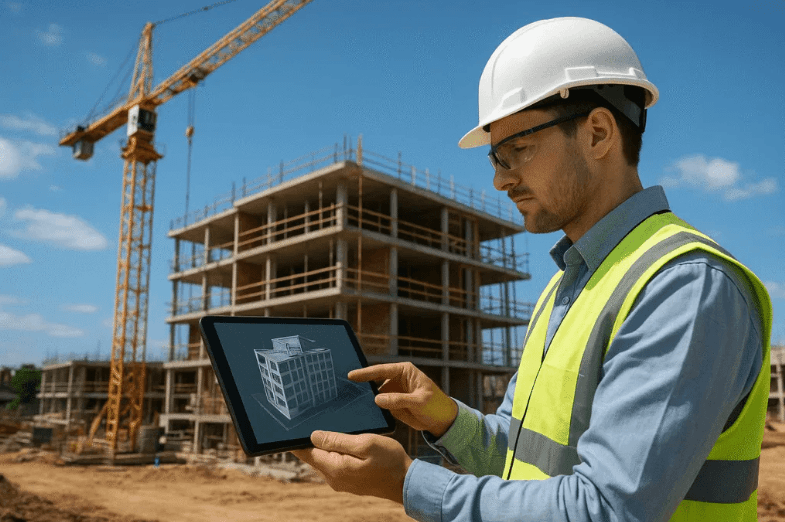
Cloud-connected mobile tools close that gap. Site managers log daily reports, equipment hours, delivery receipts, timesheet approvals — right from the field, right when it happens. No double entry. No lag between “this happened” and “the office knows about it.” Progress billing gets more accurate almost as a side effect.
Automating Procurement and Supply Chain Visibility
Material prices don’t sit still, and neither do delivery timelines. A standardized platform automates the procurement workflow so firms aren’t caught flat-footed on either front.
- PO Matching. Three-way matching — purchase order, delivery note, invoice — catches unauthorized spend before it becomes a line item nobody can explain later.
- Requisition Tracking. Digital approval chains speed material requests up without loosening budget discipline. Both, at once.
- Supplier Analytics. Track vendor history — reliability, pricing, on-time delivery — and you stop learning the hard way which suppliers actually deliver.
Streamlining Subcontractor Management and Compliance
Subs often make up the biggest chunk of a project’s cost, so sloppy compliance tracking here is a real liability, not a paperwork nuisance. Centralized platforms manage the whole lifecycle — pre-qualification through final retention — in one system.
Insurance certs, safety docs, tax status, payment applications: all tracked in one secure portal. And here’s the part that actually protects the GC — automated holds block payment if a sub’s compliance paperwork lapses. No expired insurance cert slipped through because someone forgot to check.
Predictive Analytics and AI-Driven Risk Mitigation
Every project a firm has ever run is sitting there as data. Most companies barely use it. Modern platforms apply machine learning across that historical and live project data to flag problems before they’re actual problems.
- Schedule slippage alerts compare real site progress to baseline and flag bottlenecks early.
- Margin creep detection catches the slow, quiet cost trends that eat a budget over months, not days.
- Resource optimization looks at equipment utilization and tells you where you’re paying for rental gear you didn’t need.
See also: The strategic advantage most business owners overlook
Scalability and Infrastructure Integration
Firms expanding into new markets or joint ventures need systems that scale without breaking. Open-API architecture lets these platforms plug into BIM tools, estimation software, HR systems — whatever the firm already runs.
Cloud-native deployment means uptime, redundancy, and security baked in from the start. New entities, new business units, new job sites — all addable without disrupting whatever’s already running.
Final Thoughts
The old way — fragmented systems stitched together with hope — just doesn’t hold up anymore. Firms that move to purpose-built ERP software for construction get a real digital backbone: site activity, procurement, compliance, and financial data, all connected, all in real time. The contractors who make this shift end up with tighter risk control, better-protected margins, and a real edge over the ones still running everything off spreadsheets.