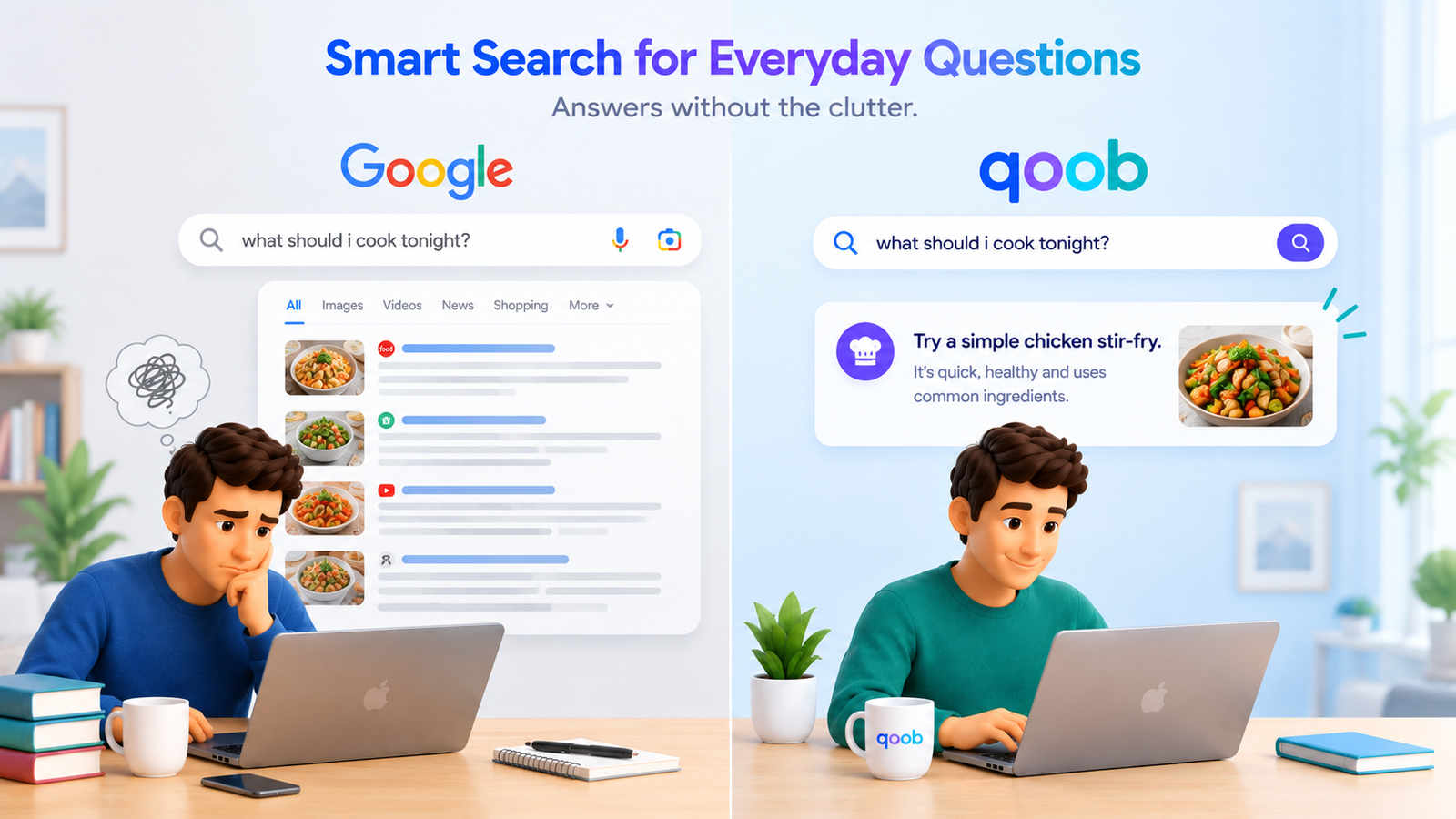

The internet has made it easier than ever to find information. With a few words typed into a search box, users can access millions of pages, articles, reviews and resources.
But having access to more information does not always make finding an answer easier.
For many everyday questions, people do not need hundreds of search results. They simply want a clear answer that helps them understand something, compare options or decide what to do next.
This is where smart search is changing the way people use the internet. Instead of making users sort through endless links, modern search experiences can understand natural language, identify intent and provide information in a more direct format.
The goal is simple: spend less time searching and more time getting things done.
Explore Smart Search With Qoob
If you want a simpler way to find useful information without sorting through unnecessary search clutter, explore smart search from Qoob. Its platform is designed to provide short, clear answers for everyday questions and decisions, helping users move from searching to understanding with less effort.
What Is Smart Search?
Smart search uses artificial intelligence and advanced search technology to understand what a person is actually asking.
Traditional search often focuses on matching keywords with web pages. Smart search can go further by considering the meaning and context behind a question.
This makes it possible to ask questions naturally instead of trying to guess which keywords will produce the best results.
How Smart Search Works
A smart search system typically combines several processes to provide a more useful response.
These can include:
- Understanding the intent behind a question
- Finding relevant information
- Processing and organising that information
- Presenting the answer in a clear format
The exact technology differs between platforms, but the objective is to reduce unnecessary searching and make useful information easier to understand.
Why Traditional Search Can Feel Cluttered
Traditional search engines remain valuable for research and exploration. However, a simple question can sometimes produce an overwhelming number of results.
Users may have to open several websites, close advertisements, compare different explanations and decide which information is relevant.
This process can take considerably longer than expected.
Too Many Results Can Create More Work
Imagine searching for a simple recipe.
Instead of getting the basic information you need, you may encounter lengthy introductions, advertisements, pop ups, unrelated recommendations and several versions of the same recipe.
The information is available, but finding the useful part requires effort.
Smart search aims to reduce this friction by focusing more directly on the question.
Everyday Questions Do Not Need Complicated Research
Not every search is a research project.
People search throughout the day for small pieces of information that help them make decisions. They may want to know what to cook, where to go, what product to choose or how to solve a simple problem.
These questions usually have a practical purpose.
Examples of Everyday Searches
Smart search can be useful for questions such as:
- What should I cook with the ingredients I have?
- Which option is better for my needs?
- Where should I go this weekend?
- How does a particular product work?
- What should I consider before making a purchase?
The common factor is that the user wants useful information that can be acted upon.
From Searching to Understanding
A major difference between traditional search and smart search is how information is presented.
Traditional search often gives users a list of pages. The user then has to visit those pages and build an understanding of the topic.
Smart search can bring relevant information together and provide a more direct response.
Qoob describes its search experience as giving short, clear answers instead of making users work through a pile of links or lengthy AI generated text.
Why Direct Answers Matter
A direct answer can save time when the question is straightforward.
If someone wants to understand the difference between two products, for example, they may not need to read ten separate reviews before identifying the key differences.
A concise response can provide the main information first, while allowing the user to continue researching if they need more detail.
Natural Language Makes Search Easier
One of the most useful features of AI powered search is the ability to ask questions naturally.
Users do not need to think like a search engine. They can explain what they want in ordinary language.
For example, instead of searching for:
“best weekend activities family”
a user could ask:
“What are some fun weekend activities for a family with young children?”
The second question provides more context about the actual intention.
Search Based on Intent
Understanding intent can make search results more relevant.
A person searching for “running shoes” could be looking for shoes for beginners, long distance running, casual use or a specific budget.
The words may be similar, but the desired answer can be very different.
Smart search attempts to understand this difference.
Personalisation Can Make Answers More Relevant
People have different priorities.
Two users can ask the same question but need different answers because their budgets, interests, locations or preferences are different.
Personalised search attempts to take these factors into account.
Qoob says its search experience uses context and user preferences to make answers more relevant to the individual.
Context Changes the Answer
Consider the question, “Where should I go on holiday?”
Without context, there are countless possible answers.
If the user adds that they want a short family trip, have a limited budget and prefer a quiet destination, the question becomes much easier to answer meaningfully.
Context turns a general search into a more useful one.
Smart Search Can Help With Shopping Decisions
Online shopping is another area where search can become complicated.
A single product category can contain hundreds of choices, each with different features, prices and reviews.
Users often have to compare several pages before understanding which options fit their needs.
Making Comparisons Easier
Smart search can help organise product information around a specific question.
For example, instead of simply searching for laptops, a user might ask which laptop is suitable for remote work, has good battery life and fits a particular budget.
This makes the search more decision focused.
It is still important to check product specifications, prices and other information from reliable sources before making an important purchase.
Smart Search Can Simplify Travel Planning
Travel planning often involves many separate searches.
Users may need to research destinations, attractions, restaurants, transport, activities and accommodation.
This can quickly lead to multiple browser tabs and scattered information.
Qoob specifically highlights travel planning as an everyday use case, describing how users can ask where they should go on vacation and receive a direct answer rather than sorting through numerous booking sites.
From Ideas to Plans
A smart search tool can help turn a broad travel question into a more focused plan.
Instead of starting with dozens of websites, users can begin with a simple question and refine their search based on their preferences.
This can make the initial planning stage easier and less overwhelming.
Smart Search and Recipe Ideas
Food is another everyday area where people frequently search for information.
Someone may have a few ingredients available but no idea what to prepare.
A traditional search might require several separate searches for recipes containing each ingredient.
A smart search approach can make the question more conversational.
See also: What Successful eCommerce Businesses Do Differently
Ask Based on What You Have
For example, a user could ask:
“I have eggs, tomatoes, spinach and bread. What quick meal can I make?”
This type of question describes the actual situation rather than simply providing keywords.
The result can therefore be more useful for the specific decision the user is trying to make.
Smart Search Reduces Information Overload
Information overload occurs when people are given more information than they can easily process.
The internet makes this particularly common because almost every question can produce countless results.
Smart search can help by prioritising relevance and presenting information in a more focused way.
Less Clutter, More Clarity
Qoob positions its platform around reducing search clutter and providing clean, direct answers that users can act on. Its website says the service is designed to help users spend less time researching and more time doing.
This approach is particularly useful for simple questions where extensive research is unnecessary.
Smart Search Does Not Replace Deeper Research
Smart search is not designed to eliminate every form of research.
Some questions require detailed investigation, multiple sources and professional advice.
For important subjects such as health, law, finance or safety, users should verify information with appropriate authoritative sources.
Use the Right Level of Research
The best search experience depends on the question.
A simple question may only require a short answer.
A complicated question may require several sources and a deeper investigation.
Smart search can provide a useful starting point, helping users understand the basic information before deciding whether further research is necessary.
Privacy Is Also Important
As search becomes more personalised, privacy becomes an important consideration.
Users may share questions, preferences and other contextual information with AI powered services.
Understanding how a platform handles that information is therefore an important part of choosing a search tool.
Qoob states that users can control what context it keeps and that it does not sell usage data. These are claims made by the company, so users should review its privacy information when evaluating the service.
What to Consider
When choosing a smart search platform, users can look at:
- What information is collected
- How search history is handled
- Whether personal context can be controlled
- How the service uses stored information
These factors can help users make informed decisions about the tools they use.
How Smart Search Could Shape the Future
Search is gradually moving from simple keyword matching toward more conversational and personalised experiences.
The objective is no longer just to help people find websites. It is increasingly about helping them understand information and decide what to do with it.
Qoob describes this as bridging the gap between curiosity and action by turning large amounts of information into clear, useful answers for everyday decisions.
From Information to Action
This shift could change how people interact with the web.
Instead of searching, opening multiple pages and comparing information for every small question, users can start with a direct response and explore further only when necessary.
The result is a more focused relationship with online information.
Choosing a Smart Search Experience
Different search tools are designed for different purposes.
Some are focused on traditional web discovery. Others are designed primarily for conversation, content creation or research.
A smart search platform focuses on making information easier to find and use for practical questions.
Look for Useful Features
When evaluating a smart search tool, consider whether it:
- Understands natural language
- Provides relevant and concise answers
- Uses context appropriately
- Gives users control over their information
- Helps with practical decisions
The right choice depends on what you expect from search and how you typically use it.
Final Thoughts
Smart search is changing the way people approach everyday questions.
Instead of treating every search as an exercise in finding and comparing web pages, AI powered search can focus more closely on what the user actually wants to know.
The biggest benefit is not simply speed. It is clarity.
When search provides relevant information in a simple format, users can spend less time navigating through clutter and more time understanding their options.
Traditional search will continue to be useful for detailed research and exploration. Smart search offers another approach for the everyday questions that do not require a long research process.
As AI continues to develop, search is likely to become more conversational, contextual and personalised. The goal is not to provide more information than users can process. It is to provide useful information at the moment they need it.
Qoob is a smart search platform built to provide clear, personalised answers that help simplify everyday questions and decisions.