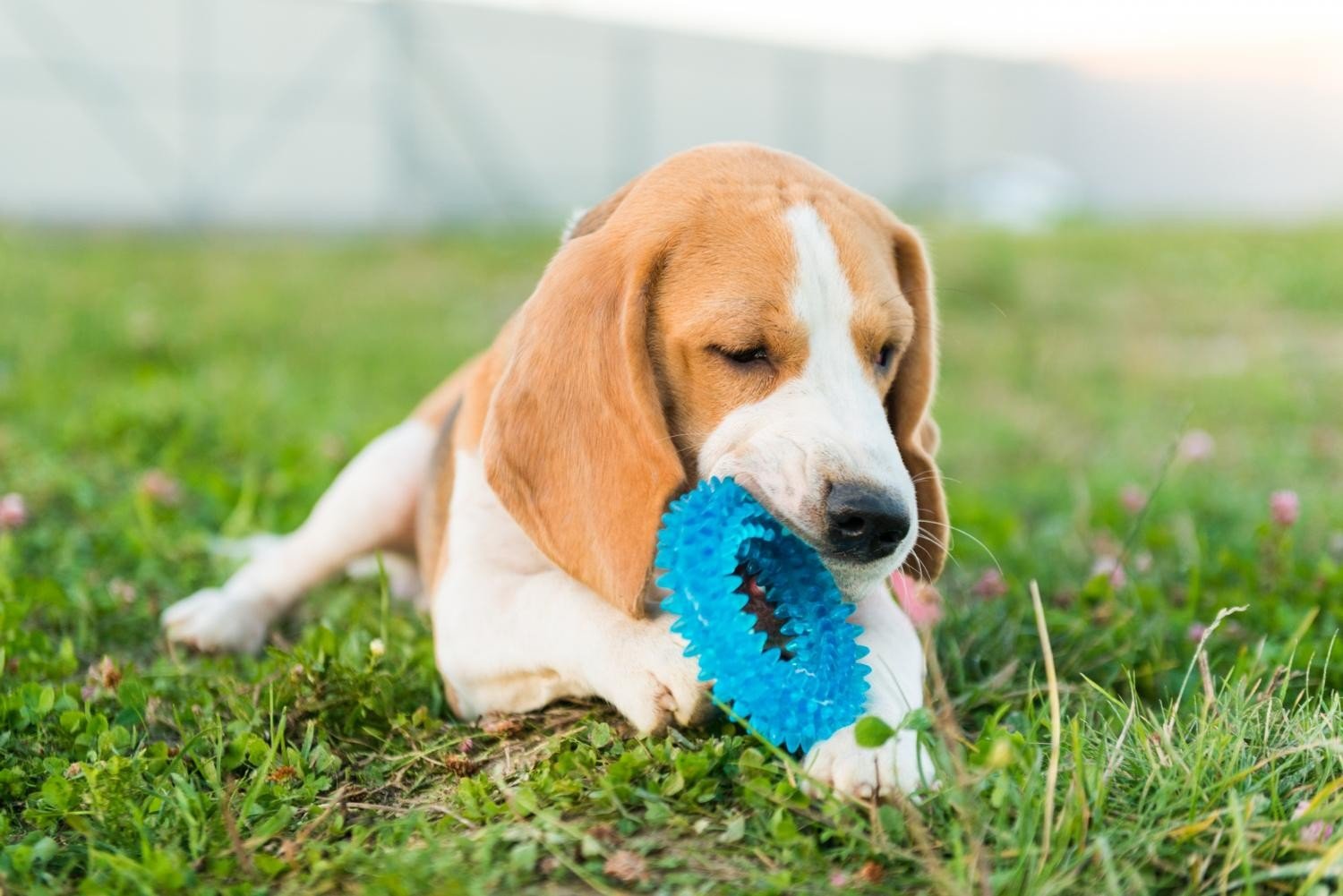

Chewing is one of the most natural activities for dogs. Puppies chew while exploring their surroundings, young dogs often chew during periods of development, and adult dogs may continue chewing simply because they enjoy it. Some dogs are gentle with their toys, while others can destroy a new toy within minutes.
Because chewing habits vary so much, choosing the right toy is not simply about finding something attractive or durable. A suitable toy should match your dog’s size, age, chewing strength, personality, and preferred activities. The right choice can make playtime more enjoyable while giving your dog an appropriate outlet for its natural chewing behavior.
There are many types of chew toys for dogs available, ranging from soft options for gentle chewers to more durable products designed for dogs that put considerable pressure on their toys. Understanding the differences can help pet owners make better purchasing decisions and avoid products that are unlikely to suit their pets.
Why Dogs Like to Chew
Dogs chew for several reasons. Puppies may chew because they are discovering the world through their mouths. Chewing can also become more noticeable during periods when puppies are experiencing changes in their teeth and gums.
Adult dogs may chew for enjoyment, stimulation, relaxation, or because chewing is simply part of their natural behavior. Some dogs are particularly interested in chewing and will seek out objects whenever they have nothing else to do.
Chewing can also provide mental engagement. A dog that spends time working on an appropriate toy has something to concentrate on, which can make playtime more interesting.
However, chewing should not be viewed as a problem that needs to be eliminated. The better approach is to provide appropriate objects that allow dogs to express this natural behavior safely.
Understand Your Dog’s Chewing Style
Before buying chew toys for dogs, watch how your dog behaves with the toys it already has.
Does your dog gently carry toys around? Does it nibble at them? Does it immediately bite through soft materials? Does it focus on one particular area of a toy? Does it enjoy pulling, shaking, or tearing?
These observations can tell you more than a general product description.
A gentle chewer may enjoy softer toys that provide some flexibility. A persistent chewer may need a product made from more durable materials. A dog that likes to retrieve may prefer a chew toy that can also be used during interactive games.
There is no reason to assume that every dog will enjoy the same type of toy.
Consider Your Dog’s Size
A toy should be appropriately sized for the dog using it.
A toy that is too small may not be suitable for a larger dog. On the other hand, an oversized toy may be difficult for a small dog to carry or manipulate.
When shopping, check the product’s recommended size range. If your dog is between sizes, consider its chewing habits as well as its physical size.
The shape of the toy can also influence how easily your dog can hold and use it. Some dogs prefer toys that can be gripped between their paws, while others enjoy objects they can carry in their mouths.
Age Can Influence Toy Preferences
A puppy’s needs can differ considerably from those of an adult dog.
Young dogs are often curious and energetic. They may explore toys through chewing, carrying, biting, and pushing them around. Toys that provide an appropriate texture can help keep them engaged.
Adult dogs may have established preferences. Some become strongly attached to particular shapes or materials, while others enjoy variety.
Senior dogs can also experience changes in their teeth, gums, energy levels, and play habits. A toy that was suitable during adulthood may not remain comfortable as the dog gets older.
Pay attention to changes in behavior. If an older dog suddenly avoids a favorite toy or seems uncomfortable while chewing, dental or other health concerns may need to be considered.
Material Matters
The material used to make a chew toy affects how a dog interacts with it.
Soft toys may be appropriate for gentle play and dogs that do not aggressively chew. More durable materials may be preferable for dogs that quickly destroy softer products.
However, durability does not automatically mean that a product is appropriate for every dog. Some extremely hard materials may not be suitable for dogs with certain dental concerns.
The objective is to find an appropriate balance between durability and suitability.
Inspect toys regularly, regardless of the material. No toy remains indestructible forever, especially when used by a determined chewer.
Look at the Toy’s Shape
Shape is another factor that is sometimes overlooked.
A toy with an interesting shape can encourage dogs to interact with it in different ways. Some shapes are easier to hold, while others may encourage chewing from different angles.
Dogs can also have strong preferences. One dog might prefer a long toy that can be carried around, while another may prefer a compact object that can be held between its paws.
If your dog ignores certain shapes but consistently chooses others, use that information when making future purchases.
Interactive Chew Toys Can Add More Engagement
Some chew toys for dogs are designed primarily for chewing, while others can also be used during interactive activities.
A toy can become more valuable when it supports several forms of engagement. For example, a product may be suitable for chewing while also encouraging fetching, carrying, or problem solving.
Interactive play is particularly useful because it creates an opportunity for dogs and owners to spend time together.
Playing with your dog can strengthen your relationship while also providing physical and mental activity.
Toys for Dogs That Get Bored Easily
Boredom can contribute to unwanted chewing around the home.
A dog that has little to do may begin chewing furniture, shoes, cushions, or other household objects. Providing suitable toys can give the dog an alternative activity.
However, toys should not be the only solution to boredom.
Dogs also need walks, training, exploration, social interaction, rest, and opportunities to use their natural abilities. A toy works best as one part of a broader routine.
Rotating toys can also help. Instead of leaving every toy available all the time, some owners find it useful to offer a smaller selection and switch them periodically.
A toy that has not been available for several days may feel more interesting when it returns.
Choosing Toys for Powerful Chewers
Powerful chewers require additional consideration.
If your dog regularly destroys toys, choose products specifically designed for stronger chewing behavior and follow the manufacturer’s recommendations.
Even durable toys can eventually become damaged. Inspect them frequently for cracks, missing pieces, sharp edges, or other changes.
Do not assume that a product described as highly durable is completely indestructible. Dogs vary significantly in strength and chewing style.
If your dog manages to break pieces from a toy, remove the product and replace it with a more suitable option.
Avoid Making Durability the Only Priority
It can be tempting to search for the strongest toy possible when you have a dog that destroys everything. However, the hardest product is not automatically the best product.
Dental health should also be considered. Some dogs may have sensitive teeth or existing dental problems that make extremely firm products unsuitable.
The right choice depends on the individual dog.
For dogs with known dental issues, ask your veterinarian for guidance about suitable toys and chewing activities.
Inspect Toys Regularly
Regular inspection is one of the simplest habits a pet owner can develop.
Look at the toy before giving it to your dog. Check for:
- Cracks
- Torn sections
- Loose pieces
- Sharp edges
- Missing material
- Significant changes in shape
- Signs that the toy is becoming too small
If you notice damage that could create a risk, remove the toy.
The frequency of inspection should depend on how aggressively your dog chews. A toy used by a powerful chewer may need to be checked after every play session.
Supervision Is Especially Important With New Toys
Every dog interacts with toys differently.
When introducing a new toy, observe your dog closely. Watch how it bites, carries, pulls, and chews the product.
A toy that appears suitable on paper may not behave as expected once your dog starts using it.
Supervision is particularly important during the first few sessions because you can identify potential problems early.
If your dog attempts to swallow pieces, breaks the toy unusually quickly, or shows signs of discomfort, stop using it.
Use Toys as Part of Training
Chew toys can also become useful training tools.
You can teach your dog to choose an appropriate toy instead of household objects. When the dog picks up its own toy, positive reinforcement can help encourage the behavior.
For example, if your puppy starts chewing a shoe, calmly redirect its attention toward an appropriate toy. Once the puppy engages with the toy, reward the desired behavior.
Consistency is important. Dogs learn through repeated experiences, so providing appropriate alternatives can help establish good habits.
Keep Household Rules Consistent
If one person allows a dog to chew household objects while another person discourages it, the dog can become confused.
Everyone in the household should follow the same basic rules about what the dog is allowed to chew.
Make appropriate toys easily accessible, particularly during times when your dog is likely to become restless.
Keeping shoes, children’s toys, remote controls, and other tempting objects out of reach can also reduce opportunities for unwanted chewing.
Rotate Different Types of Toys
Dogs can become bored with having the same objects available every day.
Instead of buying a huge number of toys, consider maintaining a small collection and rotating them.
You might offer one chewing toy, one interactive toy, and one toy for games such as retrieving. After several days, switch some of the options.
This can make familiar toys feel more interesting without constantly buying new products.
It also gives you a better understanding of which types your dog actually prefers.
Watch for Changes in Chewing Behavior
Your dog’s chewing habits can provide useful information.
A sudden increase in chewing may be related to boredom, changes in routine, stress, or simply increased interest in chewing. A sudden decrease may also be meaningful, particularly if your dog previously enjoyed chewing.
If chewing changes are accompanied by difficulty eating, excessive drooling, bad breath, pawing at the mouth, bleeding gums, or other unusual symptoms, contact a veterinarian.
Behavioral changes should not always be assumed to be a toy preference issue.
Clean Toys When Necessary
Toys can collect dirt, saliva, food particles, and other debris over time.
Follow the cleaning instructions for each product. Some toys can be washed easily, while others may require a different cleaning method.
Keeping toys reasonably clean can help maintain a more hygienic play environment.
Replace toys that cannot be cleaned properly after becoming heavily damaged or contaminated.
How Many Toys Does a Dog Need?
There is no fixed number that every dog needs.
A few suitable toys can be enough if they match the dog’s interests. What matters is variety and usefulness rather than quantity.
Consider having options that support different activities. One toy might be ideal for chewing, another for interactive play, and another for carrying or retrieving.
The best collection is one that your dog actually uses.
Making Better Choices for Your Dog
Selecting chew toys for dogs becomes much easier once you stop thinking of the process as a simple shopping decision.
Start by observing your dog’s behavior. Consider its size, age, chewing strength, dental health, and preferred activities. Then select products that fit those characteristics.
Inspect toys regularly and supervise your dog when introducing something new. If a product becomes damaged, replace it rather than continuing to use it.
Most importantly, remember that toys are only one part of a dog’s daily life. Regular exercise, training, affection, rest, and mental stimulation all contribute to a healthy routine.
A well chosen chew toy can provide an enjoyable outlet for a dog’s natural chewing instinct while giving owners a practical way to make playtime more engaging.
FAQs
Why do dogs like chew toys?
Dogs naturally enjoy chewing for several reasons, including exploration, stimulation, relaxation, and enjoyment. Appropriate toys give them a suitable object for this behavior.
How do I choose the right chew toy for my dog?
Consider your dog’s age, size, chewing strength, dental condition, and preferred activities. Also check the product’s recommended size and intended use.
Are durable chew toys suitable for every dog?
Not necessarily. Durability is useful for strong chewers, but some very firm products may not be appropriate for dogs with certain dental concerns. Individual needs should always be considered.
How often should I replace my dog’s chew toys?
Replace toys whenever they become significantly damaged, develop sharp edges, lose pieces, or become small enough to create a potential swallowing concern.
Should I supervise my dog with chew toys?
Yes. Supervision is particularly important when introducing a new toy or when your dog is an aggressive chewer.
Can chew toys help with boredom?
They can provide an appropriate activity and mental stimulation, but toys should be combined with exercise, training, play, and other forms of enrichment.
Can puppies use chew toys?
Puppies can benefit from appropriately designed chew toys, but the product should be suitable for their age, size, and developing teeth.
Why does my dog destroy every toy?
Some dogs have very strong chewing instincts and naturally work aggressively on toys. Choose products intended for their chewing style, inspect them regularly, and remove damaged toys.
Should I have different types of toys?
Having a few different types can provide variety. A combination of chewing, interactive, and play focused toys can help keep your dog engaged.
What if my dog suddenly stops chewing?
A sudden change may be related to dental discomfort, illness, stress, or another change in circumstances. If the change persists or occurs alongside other symptoms, speak with your veterinarian.