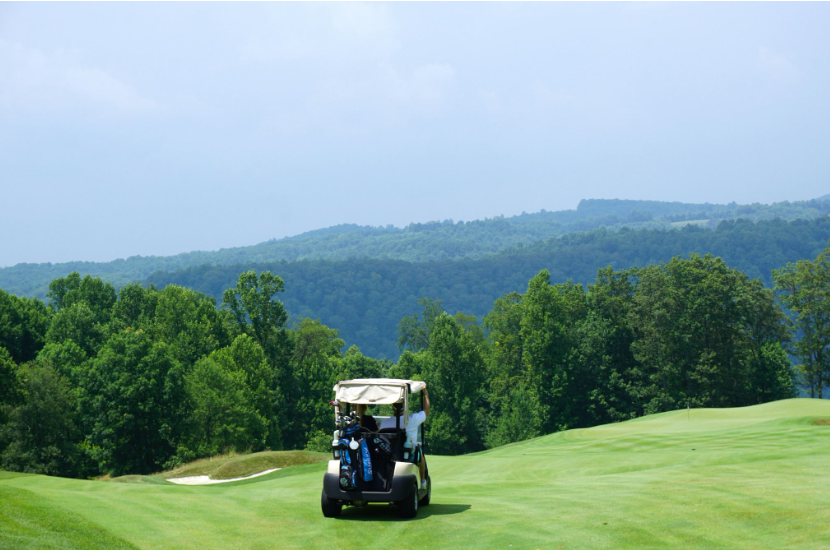

Mountain golf offers something that a typical flat course cannot. You get elevation changes, dramatic landscapes, cooler air, and views that can make you pause before every shot. The scenery can range from snow-covered Rocky Mountain peaks to thick forests, alpine lakes, desert mountains, and the rolling Blue Ridge.
For golfers who enjoy traveling, these courses offer a chance to combine a serious round with an unforgettable destination. Some demand precise club selection because of elevation changes, while others reward players who can handle uneven lies and changing conditions.
Here are 10 mountain golf courses that deserve a place on your golf travel list.
Fairmont Banff Springs Golf Course, Alberta, Canada
Few courses match the setting of Fairmont Banff Springs. Located in Banff National Park, the Stanley Thompson-designed course winds along the Bow River beneath the peaks of Sulphur Mountain and Mount Rundle.
The 18-hole course opened in 1928 and remains one of the most recognizable mountain golf layouts in Canada. The famous fourth hole, known as Devil’s Cauldron, features a dramatic tee shot toward a green beside a glacial lake.
The scenery can easily distract you, but the course still demands thoughtful shot placement. Wildlife sightings can also become part of the round, with elk regularly appearing around the course.
Fairmont Jasper Park Lodge Golf Course, Alberta, Canada
Another Stanley Thompson design, Fairmont Jasper Park Lodge Golf Course sits deep in the Canadian Rockies. The 18-hole course opened in 1925 and features elevated tees, dramatic bunkering, forested fairways, and distant mountain views.
The layout works naturally with the surrounding terrain. Instead of feeling like a course placed beside the mountains, it feels like part of the landscape.
Golfers can expect views of rocky peaks, forests, lakes, and plenty of wildlife. The course also completed a major restoration project after its centennial season, helping preserve Thompson’s original design features.
Kananaskis Country Golf Course, Alberta, Canada
Kananaskis Country Golf Course gives you two mountain courses to choose from, Mount Kidd and Mount Lorette. Both sit at nearly 5,000 feet, while the surrounding mountains rise to roughly 9,700 feet.
The valley setting creates expansive views throughout the round. Glacier-fed creeks, the Kananaskis River, forests, and towering peaks all contribute to the experience.
The elevation also affects your golf game. Golfers can see their shots travel farther at this altitude, so you may need to adjust your club selection.
Silvertip Resort, Alberta, Canada
Silvertip Resort in Canmore takes mountain golf to another level. The course sits high above the town and features views of the Canadian Rockies from many parts of the layout.
Designed by Les Furber, the par-72 course climbs and descends more than 600 feet. That elevation change creates a round where distance control matters almost as much as direction.
The combination of rocky terrain, pine forests, sweeping valleys, and towering peaks makes Silvertip particularly memorable. Players should pay close attention to their lies and elevation changes before choosing a club.
Fairmont Chateau Whistler Golf Club, British Columbia, Canada
Whistler is already famous for its mountain scenery, and the Fairmont Chateau Whistler Golf Club takes full advantage of its location.
Robert Trent Jones Jr. designed the 18-hole, par-72 course on the slopes of Blackcomb Mountain. The layout features forested holes, mountain views, lakes, and natural rock formations.
The eighth hole stands out with an elevated tee overlooking a lake and granite landscape. The course also provides enough variety to keep the round interesting for golfers with different skill levels.
Keystone Ranch Golf Course, Colorado, USA
Keystone Ranch Golf Course combines mountain scenery with an old Western ranch setting. The course sits among lodgepole pines, sage meadows, and mountain ridges, with views of Mount Baldy and the Gore and Ten Mile ranges.
Designed by Robert Trent Jones Jr., the 18-hole course reaches an elevation of about 9,300 feet. That altitude can have a noticeable effect on ball flight, so golfers need to adjust their normal distances.
The ranch setting gives the course a different personality from many resort layouts. You get wide mountain views without losing the character of the surrounding Colorado landscape.
Red Sky Golf Club, Colorado, USA
Red Sky Golf Club sits near Vail and Beaver Creek and offers two mountain courses, one designed by Tom Fazio and the other by Greg Norman.
The Fazio course stretches across open sage-covered hills, aspen forests, and mountain terrain. Players also get views toward Vail’s Back Bowls throughout the round.
The course designers worked with the existing landscape instead of trying to flatten or heavily reshape it. That approach gives the layout a natural feel and makes the scenery an important part of the experience.
The Country Club at Castle Pines, Colorado, USA
Located nearly 7,000 feet above sea level, The Country Club at Castle Pines provides a combination of elevation, pine forests, rugged terrain, and Rocky Mountain views.
The Jack Nicklaus Signature course moves through different elevations, giving golfers changing perspectives throughout the round. Some holes provide broad mountain views, while others place you among dense pine forests.
The course also features significant elevation changes, so golfers need to think carefully about distance control and club selection.
Arizona National Golf Club, Arizona, USA
Mountain golf does not always mean snow-covered peaks. Arizona National Golf Club shows how spectacular mountain golf can look in a desert environment.
Located in the foothills of the Santa Catalina Mountains in Tucson, the Robert Trent Jones Jr. design follows the natural contours of the land. Mesquite-lined arroyos, rocky formations, giant saguaros, and mountain vistas surround the course.
The desert setting also changes how you approach the game. You need to think about native areas, uneven terrain, and the effects of the dry climate while enjoying the mountain backdrop.
Grandfather Golf and Country Club, North Carolina, USA
Grandfather Golf and Country Club brings mountain golf to the Blue Ridge Mountains. The club features both a Championship Course and Mountain Springs Course, surrounded by preserved mountain scenery.
The Championship Course was designed by Ellis Maples, while the Mountain Springs Course provides a more family-friendly mountain golf experience.
The scenery changes from hole to hole, with forests, slopes, and mountain views creating a different atmosphere from the high-altitude courses of Colorado and the Canadian Rockies.
Choosing the Right Gear for Mountain Golf
Mountain golf can put extra demands on your equipment. Uneven lies, elevation changes, wind, and different temperatures can all affect how your equipment performs.
If you are preparing for a golf trip, researching the best taylormade golf balls can help you choose a ball that matches your swing and playing conditions.
Your driver also deserves attention before a mountain trip. A reliable driver option can help you find a combination of distance, forgiveness, and control that suits your game.
Footwear matters just as much. Mountain courses can feature slopes, wet conditions, uneven lies, and long walks. Looking at the best spiked golf shoes can help you find the traction and stability you need.
Plan for the Conditions
Mountain golf requires more preparation than an ordinary weekend round. Check the weather before you leave and bring layers because temperatures can change quickly.
Pay attention to elevation when planning your yardages. A shot that normally carries a certain distance at sea level may travel differently at higher elevations.
You should also expect changing wind conditions. Mountains can create sheltered areas on one hole and strong gusts on another. Take an extra moment before each shot to judge the wind, elevation, lie, and landing area.
The Views Are Part of the Experience
The best mountain golf courses give you plenty to think about, but they also give you plenty to see. From the Canadian Rockies to Colorado’s high country and Arizona’s desert mountains, each destination offers a different version of scenic golf.
A great round does not always require a low score. Sometimes the most memorable moments come from standing on a tee box, looking across the mountains, and taking in the setting before you make your swing.
About the Author
Jordan Fuller is a golf expert and experienced writer who shares practical insights on golf courses, golf equipment such as Callaway drivers, golf destinations, and how to improve your game.