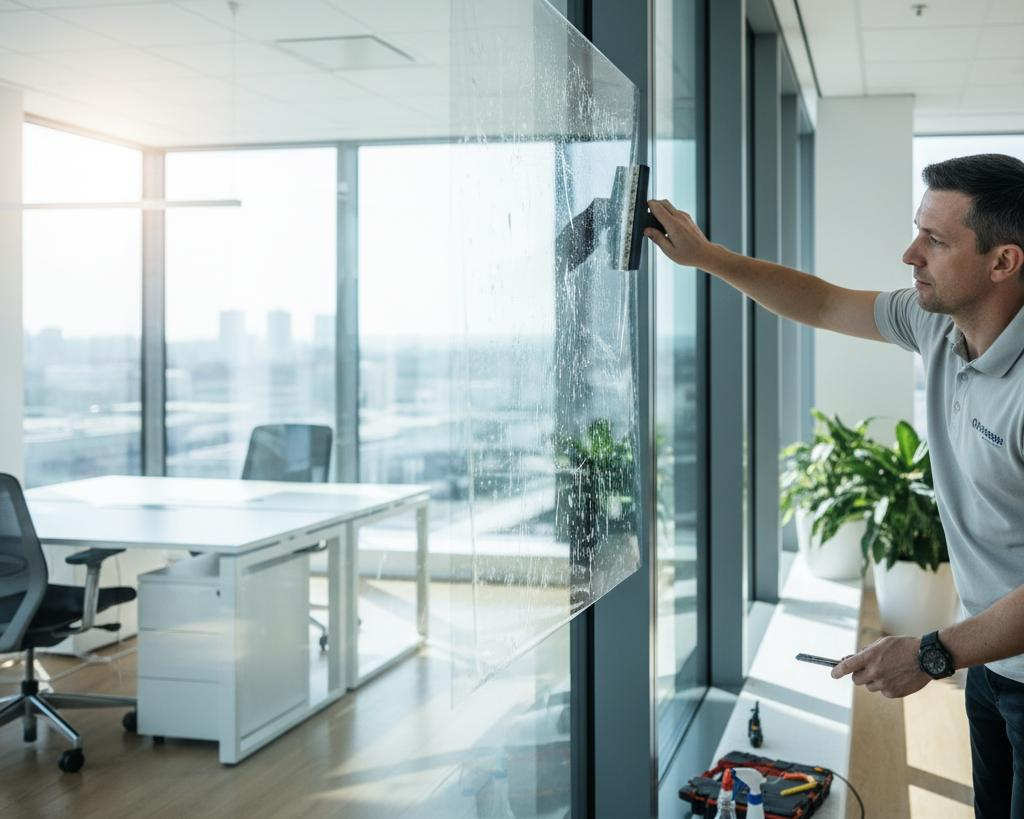

Large windows can make an office, retail store, showroom, or commercial building feel open and inviting. They also expose the interior to direct sunlight, glare, heat, and outside views. For businesses with extensive glass, these issues can affect how comfortable employees and visitors feel inside the building.
Commercial window tinting can modify the performance and appearance of existing glass without requiring a complete window replacement. Depending on the film selected, businesses can address solar heat, glare, UV exposure, privacy, and the appearance of large glazed areas.
Before installation, however, it is worth looking beyond the tint’s color or appearance. Glass type, building orientation, working conditions, privacy requirements, and the intended purpose of the film all influence the right choice.
What Is Commercial Window Tinting?
Commercial window tinting involves applying a specialized film to suitable glass surfaces in business premises. Window films are available with different levels of visible light transmission, solar control, reflectivity, privacy, and appearance.
The appropriate film depends on the building and the problem being addressed.
Commercial applications can include:
- Office buildings
- Retail stores
- Restaurants
- Showrooms
- Hotels
- Warehouses with office areas
- Medical and professional offices
- Commercial entrances and glass partitions
A business may use the same type of film throughout a property, or select different films for different areas.
Why Businesses Consider Window Tinting
The main reason for installing window film is often a specific problem with the existing glass rather than appearance alone.
For example, employees working beside west-facing windows may experience strong afternoon glare and heat. A retail store may want to reduce sunlight exposure on merchandise. A conference room may require additional privacy without completely blocking natural light.
Commercial window tinting can address several of these situations through different film types.
Solar heat control
Sunlight entering through large windows can increase indoor heat, particularly in areas exposed to direct sunlight for extended periods.
Solar-control films are designed to reduce the amount of solar energy transmitted through treated glass. The level of reduction depends on the film, existing glazing, window orientation, and other building conditions.
Glare reduction
Glare can interfere with computer screens, digital displays, television screens, and general visibility.
A suitable film can reduce the amount and intensity of visible light entering through the glass. This can be useful in offices, conference rooms, reception areas, and retail environments.
UV reduction
Ultraviolet exposure can contribute to fading and deterioration of materials placed near windows.
For retail businesses, this may be relevant to merchandise displayed close to storefront glass. In offices and hospitality environments, furniture, flooring, artwork, and interior finishes can also be exposed to sunlight.
Films designed for UV reduction can limit UV transmission through treated glass, although they cannot prevent every factor associated with fading.
Commercial Window Tinting and Employee Comfort
A workspace with uneven solar exposure can have noticeable temperature differences from one area to another.
One side of an office may feel warm while another remains relatively comfortable. Employees seated close to sunny windows may also deal with glare throughout part of the working day.
Window film can help address the solar component of these conditions by reducing the amount of solar energy and visible light entering through the glass.
However, film should not be viewed as a replacement for a building’s heating, ventilation, and air-conditioning system. Indoor temperature also depends on insulation, HVAC capacity, building design, occupancy, outdoor conditions, and other factors.
Privacy for Offices and Commercial Spaces
Some businesses require privacy without sacrificing access to daylight.
For example, a conference room with glass walls may need to prevent people outside the room from seeing sensitive discussions or screens. A ground-floor office may also require greater privacy from pedestrians.
Different film options can address these requirements.
Frosted film can obscure direct views while maintaining light transmission.
Reflective film can provide a reflective appearance under suitable lighting conditions and may offer daytime privacy.
Darker films can reduce visibility and incoming light, although they may not be appropriate for areas where bright natural lighting is preferred.
Privacy performance can change depending on indoor and outdoor lighting. A film that limits visibility during daylight hours may not provide the same result at night when interior lights are switched on.
What Businesses Should Check Before Installation
Selecting a film should start with the building rather than the product brochure.
1. Identify the main problem
Determine whether the primary issue is:
- Heat
- Glare
- Privacy
- UV exposure
- Appearance
- Excessive brightness
- A combination of these factors
This helps narrow down the appropriate type of film.
2. Examine the existing glass
Commercial buildings can contain different glazing systems, including single-pane, laminated, tempered, and insulated glass.
Film compatibility should be checked before installation because the combination of film and glazing can affect thermal conditions within the glass.
3. Consider window orientation
A north-facing window may behave differently from a west-facing window that receives strong afternoon sunlight.
Mapping the building’s sun exposure can help identify which windows are causing the most heat and glare.
4. Consider the working environment
Think about what happens near the windows.
An office with computer monitors may prioritize glare control. A retail store may be more concerned about sunlight affecting merchandise. A meeting room may require privacy, while a reception area may prioritize appearance.
5. Review the desired appearance
Window film can have a subtle, tinted, reflective, or frosted appearance. The exterior look of a commercial property may be an important consideration, particularly for storefronts, offices, and buildings with architectural glazing.
Does Commercial Window Tinting Reduce Natural Light?
It can, but the effect depends on the film selected.
Window films have different visible light transmission characteristics. A darker film generally allows less visible light through than a lighter film.
For a workplace that relies heavily on daylight, a film with higher visible light transmission may provide a better balance between glare control and interior brightness.
There is no need to assume that solar control automatically means creating a dark interior. Film selection can be based on the building’s lighting requirements as well as its solar exposure.
Professional Installation Matters
Commercial windows are often larger and more visible than residential windows. Imperfections in the installation can therefore be particularly noticeable.
Professional installation typically involves preparing the glass, measuring the panels, cutting the film accurately, applying it to the surface, and removing trapped moisture and air.
Poor preparation or application can result in:
- Visible bubbles
- Creases
- Dust beneath the film
- Uneven edges
- Inconsistent appearance
- Premature film failure
Commercial projects may also involve working around employees, customers, furniture, displays, and operating hours. Installation planning should account for the building’s day-to-day use.
Using the same film everywhere may be appropriate for some projects, but a building-specific assessment can reveal where different specifications make more sense.
Common Mistakes Businesses Should Avoid
Choosing a film based only on appearance
A film may look attractive but fail to address the property’s primary heat, glare, or privacy concern. Performance specifications should be reviewed alongside appearance.
Assuming darker means better
A darker film is not automatically the best choice for solar control. Solar performance and visible light transmission are separate considerations.
Ignoring nighttime privacy
Reflective films can behave differently after dark when interior lighting changes the balance between indoor and outdoor brightness.
Skipping glass compatibility checks
The existing glazing should be evaluated before installation, especially in buildings with insulated or specialty glass.
Expecting film to solve every temperature problem
Window film addresses solar transmission through the glass. Building insulation, HVAC performance, air leakage, and other factors also affect indoor temperature.
How to Prepare for Commercial Window Film Installation
Before scheduling the work, businesses can make the process easier by identifying the windows causing the most problems.
Track areas where employees regularly experience glare or heat. Note the time of day when sunlight is strongest. For retail properties, identify displays exposed to direct sunlight. For offices, identify workstations and meeting rooms where privacy is an issue.
It is also useful to determine whether the business wants the film installed throughout the property or only on selected windows.
A site assessment can then be used to evaluate the existing glass and recommend appropriate film specifications.
Frequently Asked Questions
How does commercial window tinting reduce heat?
Solar-control films can reduce the amount of solar energy transmitted through treated glass. The actual effect depends on the film, glazing, window orientation, and amount of sunlight reaching the windows.
Can commercial window film reduce glare?
Yes. Films with suitable visible light transmission characteristics can reduce the intensity of sunlight entering through windows, which may help with glare on computer screens and other surfaces.
Can window tinting provide privacy for an office?
Certain films can reduce visibility through glass. Frosted, reflective, and darker films can each provide different levels and types of privacy.
Can businesses install window film on existing glass?
In many cases, yes. However, the existing glazing should be checked for compatibility with the selected film before installation.
Is commercial window tinting suitable for retail stores?
It can be useful for storefronts and retail spaces where heat, glare, UV exposure, or privacy is a concern. The film should be selected according to the store’s lighting, display, and visibility requirements.