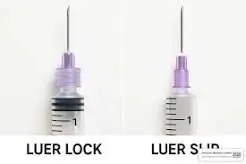

Healthcare facility procurement teams responsible for selecting medical devices across various luer connector applications benefit from a structured decision framework helping determine when luer lock versus luer slip designs best serve specific clinical needs across their equipment portfolio.
Starting With Application Risk Assessment
Effective procurement decision-making around luer lock vs luer slip selection begins with assessing the clinical risk profile of specific applications, considering factors like typical connection duration, pressure involved, and the potential clinical consequences should accidental disconnection occur during actual clinical use.
Evaluating Workflow Efficiency Considerations
Beyond pure safety considerations, procurement teams should weigh workflow efficiency implications, recognizing that luer slip’s faster connection and disconnection might provide meaningful efficiency value for high-volume, lower-risk applications, while luer lock’s additional security justifies the modest additional time investment for higher-risk applications.
Standardization Benefits Across Product Categories
Many healthcare facilities find value in standardizing luer lock as their default connector choice across most general clinical applications, reserving luer slip primarily for specific scenarios where its particular advantages provide clear, justified value, simplifying staff training and reducing potential confusion from managing extensive product variation.
Department-Specific Considerations
Different clinical departments may have distinct typical use patterns warranting different default connector standardization approaches, with emergency or critical care areas potentially prioritizing luer lock security more heavily given the elevated-risk nature of many procedures performed in these settings, compared to areas with more routine, lower-risk typical applications.
See also: 5 Ways Business Leadership Has Evolved
Cost Considerations in Connector Selection
While luer lock designs may carry modest cost premiums compared to luer slip alternatives in some product categories, procurement teams should weigh this cost difference against the clinical risk reduction and potential liability considerations associated with connection security, rather than making selection decisions purely on cost minimization without appropriate risk consideration.
Supplier Evaluation for Connector Quality
Regardless of whether selecting luer lock or luer slip products, procurement teams should evaluate supplier manufacturing quality and consistency, since even a theoretically appropriate connector type selection provides limited practical value if manufacturing quality doesn’t reliably deliver the connection performance the design is intended to provide.
Building Clear Facility Guidelines
Healthcare facilities benefit from developing clear internal guidelines addressing when luer lock versus luer slip products should be used for specific application categories, providing consistent guidance for both procurement decisions and clinical staff selecting appropriate devices for specific patient care tasks.
Conclusion
Selecting between luer lock and luer slip connector designs across a healthcare facility’s procurement portfolio benefits from structured evaluation considering clinical risk, workflow efficiency, and appropriate standardization balanced against genuine application-specific needs. This thoughtful procurement approach supports both patient safety and practical clinical efficiency across diverse care settings.
FAQs
Q1: What factors should guide the decision between luer lock and luer slip for a specific application? Consider typical connection duration, pressure involved, and the potential clinical consequences should accidental disconnection occur during actual use.
Q2: Why might facilities standardize on luer lock as a default choice? Standardization simplifies staff training and reduces confusion from managing extensive product variation, while reserving luer slip for specific scenarios with clear justified advantages.
Q3: Should cost be the primary factor in connector type selection? No, procurement teams should weigh cost differences against clinical risk reduction and liability considerations associated with connection security, not minimize cost without appropriate risk consideration.