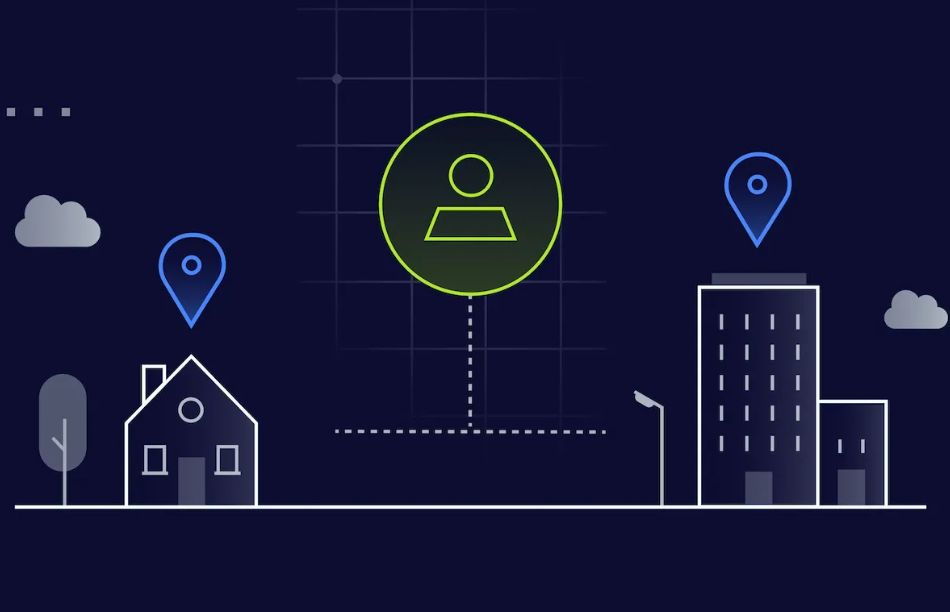

The nature of enterprise work has shifted in ways that have fundamentally altered the security challenge for IT and security teams. When the workforce was primarily office-based and applications lived in centralized data centers, security controls could be applied at well-defined network boundaries. That model served organizations reasonably well for decades. It no longer does.
Today, a large proportion of the workforce operates from locations outside the corporate office on any given day, connecting to applications that span public cloud providers, private data centers, and SaaS platforms simultaneously. The attack surface has expanded in every direction, and the perimeter-based security model has not kept pace. For organizations seeking to protect both their hybrid and remote employees without degrading the user experience that productivity depends on, Secure Access Service Edge has emerged as the architectural answer that addresses the problem at its root.
What the Hybrid Work Environment Actually Demands
Protecting a hybrid workforce is not simply a matter of scaling up remote access capacity. The security requirements of a user sitting in a corporate office, a user connecting from a home broadband connection, and a user accessing resources from a hotel wifi are materially different in terms of the threats they face, the devices they use, and the network paths their traffic travels. Yet the security policies applied to each of those users should be consistent, enforced based on who they are and what they are doing rather than where they happen to be connecting from.
This is the core security challenge that hybrid work creates. Legacy approaches cannot meet it cleanly. VPNs establish encrypted tunnels but grant broad network access after authentication, do not differentiate between device states, and route all traffic through central gateways that become performance bottlenecks as remote user populations scale. Bolting additional point solutions on top of VPN infrastructure adds complexity and creates policy gaps between tools that do not share telemetry or enforcement logic.
Organizations that evaluate SASE security for hybrid cloud deployments will find that the framework is built to address exactly this gap, by placing security enforcement in the cloud where it can be applied consistently to every user and every connection without requiring traffic to backhaul through a central point of inspection.
See also: Why Home Security Systems in Ireland Are Becoming a Necessity in 2026
How SASE Protects Remote Users
For users connecting from outside the office, SASE delivers protection through a combination of capabilities that work together rather than as independent tools. Zero trust network access is the access control layer, replacing the broad network access that VPNs grant with application-level access that is continuously verified based on user identity, device health, and behavioral context.
When a remote user attempts to connect to a business application, a SASE platform does not simply ask whether they have valid credentials. It evaluates whether the device they are connecting from meets health requirements, whether the connection context matches expected patterns for that user, and whether the specific application they are requesting is one they are authorized to access. If the context changes mid-session, the platform can adjust access dynamically rather than waiting for the connection to be re-established.
The secure web gateway component of a SASE platform protects remote users as they browse the internet, filtering traffic against threat intelligence to block access to malicious destinations and inspecting encrypted connections for threats hidden within HTTPS traffic. This is particularly important for remote workers who connect directly to the internet without the protection of corporate network controls that office-based users might benefit from.
Research into hybrid and multi-cloud security challenges documents the pressures that organizations face as distributed work models expand. A 2024 analysis of CISO strategies for hybrid cloud security identifies the expanded attack surface of hybrid environments, the difficulty of maintaining consistent security policies across disparate platforms, and the need for unified enforcement frameworks that eliminate the gaps between disconnected point solutions as the primary challenges security leaders must address. These are precisely the problems that SASE architecture is designed to solve at the network and access control layer.
How SASE Secures Cloud Application Access
A significant portion of what hybrid and remote workers access is hosted in cloud environments, and protecting access to cloud applications requires capabilities that traditional security tools were not built to provide. Cloud access security broker functionality within a SASE platform extends policy enforcement into interactions with cloud applications, providing visibility into what data users are accessing and transferring and the ability to enforce controls based on that visibility.
Without this layer of control, organizations often have limited insight into how employees are using cloud applications, including which applications have been adopted without formal IT approval. Shadow IT, the use of cloud services that have not been evaluated or sanctioned by security teams, represents a persistent risk in hybrid work environments. SASE platforms with CASB capabilities can identify these applications, assess their risk profiles, and enforce policies that prevent sensitive data from being sent to services that have not been approved.
Data loss prevention policies can be enforced at the point where data moves between users and cloud services, applying rules that restrict certain data types from being uploaded to personal cloud storage or shared with unauthorized parties. This level of enforcement is particularly important for organizations in regulated industries where data handling requirements extend to how remote employees interact with cloud services.
The Visibility Gap in Hybrid Environments
One of the most persistent challenges in securing hybrid and remote workforces is visibility. In a traditional office environment, network monitoring tools can observe traffic flowing through corporate infrastructure. In a hybrid environment, a substantial portion of user traffic flows outside corporate network infrastructure entirely, creating blind spots that threat actors have learned to exploit.
Recent research demonstrates how significant this challenge has become. An industry survey covering over a thousand security and IT leaders found that a majority lacked confidence in their tools’ ability to detect breaches across fragmented hybrid cloud infrastructure, and that the expanded attack surface of hybrid cloud environments was a leading factor driving security compromises among organizations that had not adopted unified approaches to enforcement and monitoring.
SASE platforms address the visibility gap by applying inspection to all traffic, regardless of where the user is connecting from or which path their traffic takes. Because enforcement happens in the cloud rather than at on-premises appliances, the platform can observe and log traffic from remote users, office-based users, and branch locations through a single system. This unified telemetry enables security teams to detect anomalous behavior patterns that would be invisible when monitoring only the subset of traffic that passes through corporate infrastructure.
Branch Office and Hybrid Location Security
The hybrid workforce security challenge is not limited to individual remote users. Many organizations operate branch offices and hybrid work locations where employees connect to corporate resources through whatever internet connectivity is available at that site, without the benefit of a full stack of security hardware at each location.
SASE addresses this by allowing branch offices to connect through a lightweight edge device that leverages cloud-delivered security enforcement rather than on-premises appliances. Security policies defined centrally in the SASE platform are applied consistently at branch locations without requiring dedicated security hardware at each site. This reduces the capital and operational cost of securing branch locations while ensuring that users at those sites receive the same level of protection as users connecting through the corporate headquarters network.
For organizations with large numbers of branch locations, the operational implications of this approach are significant. Policy updates propagate centrally rather than requiring configuration changes at each physical location. Security events from all locations flow into unified monitoring systems rather than being siloed by site. And new locations can be brought into the security architecture without shipping and configuring hardware.
Frequently Asked Questions
Why is traditional VPN security insufficient for protecting a hybrid workforce?
VPNs authenticate users and establish encrypted tunnels, but they grant broad access to network segments after authentication rather than controlling access at the level of individual applications. They route all traffic through central gateways, which creates latency for cloud application users and performance bottlenecks as remote user populations scale. They also do not continuously evaluate user context or device health after the initial connection is established. SASE addresses these limitations by applying continuous, context-aware access control at the application level through cloud-delivered enforcement that does not require central traffic backhauling.
How does SASE handle users who switch between office and remote locations?
SASE applies security policy based on identity and device context rather than network location. A user who connects from the office, then from home, then from a hotel experiences the same policy enforcement regardless of which network they are on, because the cloud-delivered enforcement point evaluates who they are and what they are accessing rather than where they are connecting from. This location independence is one of the core design principles of SASE and is what makes it suitable for workforces that operate from multiple locations across a given workday or week.
What security capabilities does SASE provide that protect against cloud application risks?
SASE platforms typically include cloud access security broker capabilities that provide visibility and control over interactions with cloud applications. This includes identifying sanctioned and unsanctioned cloud services in use across the organization, applying data loss prevention policies to restrict what data can be transferred to cloud applications, and enforcing access controls based on user identity and risk context. Combined with secure web gateway functionality that inspects outbound internet traffic, these capabilities extend security enforcement into the cloud application interactions that represent a significant portion of hybrid worker activity.