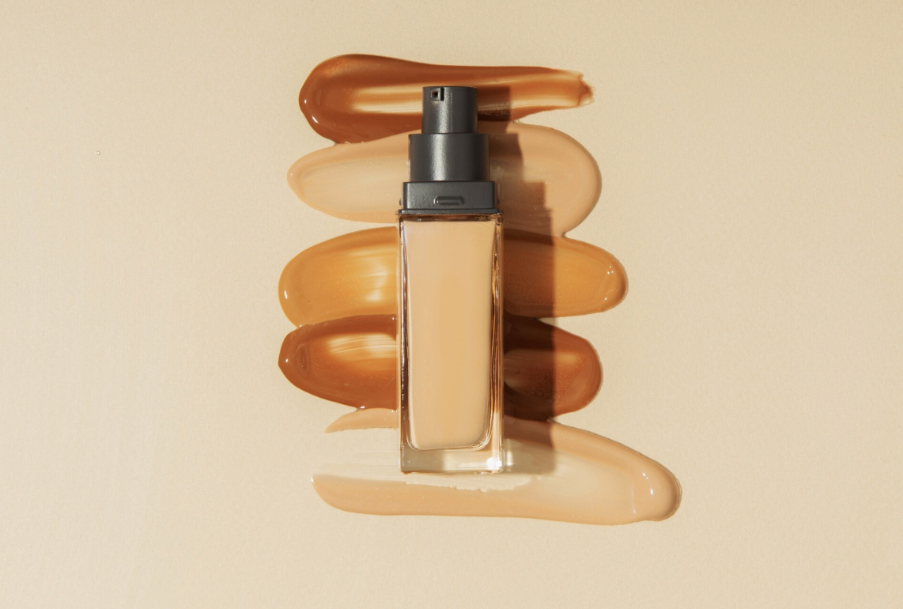

Buying a foundation should not feel like guesswork. Yet it often does. A shade looks right in the store. However, at home, it feels too dark, flat, or heavy. The issue is rarely limited to the color. Texture, finish, climate, and skin type all matter.
Here is a clear way to approach it.
Know Your Skin Type
For instance:
- You have an oily skin if your face turns shiny within hours, especially around the forehead and nose. In this case, matte or oil-free formulas are for you.
- You have a dry skin if your skin feels tight after washing or shows rough patches. So, hydrating liquids or creams are better. A dewy or soft satin finish prevents the base from catching on flakes.
- You have a combination skin if your T-zone is oily, but your cheeks feel normal or dry. So, a natural or semi-matte liquid foundation works well. It balances both areas without exaggerating either.
- You have a sensitive skin if redness appears easily or products sting. So, look for gentle formulas. Avoid heavy fragrance or harsh ingredients.
Mature skin benefits from lightweight textures. Thick layers settle into lines. A flexible, buildable formula gives better results.
When the formula suits your skin, everything else becomes easier.
Understand Undertone
Skin depth can change with sun exposure. Undertone does not.
There are three main types:
- Warm: Golden or yellow hints
- Cool: Pink or bluish tones
- Neutral: A mix of both
A mismatch in undertone is what makes the foundation look orange or dull.
Check your veins in natural light. Blue or purple suggests cool. Green means warm. A mix usually means neutral. Jewelry can also help. If both gold and silver look equally good, you are likely neutral.
When undertone aligns, the base blends quietly into the skin.
Decide on Coverage
Many people focus only on shade. The right coverage matters just as much.
Light coverage softens the complexion while letting natural skin show. It suits daily wear.
Medium coverage evens tone and hides mild redness. It remains breathable.
Full coverage conceals pigmentation and blemishes. It works well for events or long days. Apply in thin layers to avoid heaviness.
Most modern formulas allow layering. Start small. Build only where required.
See also: Tea Checker: A Smarter Way to Evaluate Tea Quality in Everyday Life
Choose a Finish That Fits
Finish changes how the skin looks overall.
- Matte gives a smooth, shine-free result. It lasts well in humid conditions.
- Dewy adds glow and softness. It suits dry or dull skin.
- Satin sits between both. It looks closest to real skin.
In summer, many prefer matte or natural finishes. During cooler months, slightly hydrating textures feel more comfortable.
Swatch the Right Way
Testing on the hand leads to disappointment. The skin tone on the face and neck differs from that on the wrist.
Apply a small stripe along the jawline. This area connects the face and neck. So, the correct shade disappears without leaving a visible border.
Always check in daylight. Indoor lighting can shift color. So, wait for at least five to 10 minutes to decide. Some formulas deepen slightly after reacting with skin warmth. This step prevents surprises later.
Consider Texture
Liquid foundations are the most versatile. They are easy to blend and suit most skin types. Cream formulas offer solid coverage. However, they may feel heavier in the heat. Powder versions absorb oil. So, they are practical for touch-ups. Stick formats are compact and convenient.
If unsure, begin with a light to medium liquid formula. It allows the room to adjust.
Final Word
The right foundation should feel comfortable, not heavy. It should smooth the complexion without masking it. Understanding skin type, undertone, coverage, and finish makes the choice clearer.